Loading...
"The Halo" — Mount Aconcagua, Argentina (6,962 meters)
There's a common thread that runs through every piece of gear I use—from the camera body to the lens to the tripod to the memory cards to the final print itself: an obsession with robustness. This isn't about having the newest technology or the lightest equipment. It's about having gear that will not fail when everything depends on it.
Most things break down at high altitude. Electronics fail. Batteries die. Materials become brittle in extreme cold. Tripods that work perfectly at sea level become unstable in high winds. Memory cards corrupt in extreme temperatures. This reality has taught me to value durability above almost everything else. When your life depends on your gear functioning in hostile environments—when you've carried equipment for days to reach a location you may never visit again—you develop a deep appreciation for things that are built to last.
The camera and lens I use aren't just chosen for their image quality—they're also built like tanks. They've survived extreme cold, high winds, dust storms, and the physical punishment of high-altitude expeditions. They don't fail when I need them most. Every piece of equipment I carry has been tested in extreme conditions and proven its reliability.
But this philosophy extends beyond field equipment to how I think about art and permanence. When we see art from millennia ago—ancient cave paintings, Roman mosaics, Egyptian hieroglyphs—we're not seeing all the art that was created. We're seeing the art that survived. The art that was durable enough to outlast empires, climate changes, wars, and the simple erosion of time.
This is why my obsession with robustness extends to the final print. I offer two types of prints, each using the most enduring materials I've found for their respective purposes: open edition prints on HahnemĂĽhle paper and limited edition prints on ChromaLuxe metal. Both represent the pinnacle of archival quality, chosen after extensive testing of alternatives.
I shoot with a Nikon D850. Not because it's the newest technology, not because it's the lightest, but because after testing countless camera systems over the years, nothing else comes close in terms of pure image quality.
I've tried mirrorless. I've tested the latest technology. Over the years, I've used the Nikon D800E, D810, D610, D7000, D5100, Canon Mark III, Sony A7R II, Sony Alpha 1, Fujifilm X-T00F, and Fujifilm X-A1. Each had its strengths. Some were lighter. Some had newer features. Some promised revolutionary improvements.
But when I compare the final images—the actual output that matters—the D850 produces results that nothing else can match. The dynamic range, the color depth, the sharpness, the way it handles extreme lighting conditions—it's simply superior. This isn't brand loyalty or nostalgia for DSLRs. It's about the final image quality, and the D850 delivers in ways that even the most advanced mirrorless systems I've tested cannot replicate.

Loading...
Yes, the D850 is heavy. Significantly heavier than modern mirrorless systems. And yes, I bring it on every mountain summit, every expedition, every extreme environment. The highest this camera has been so far is 6,962 meters (22,837 feet).
At that altitude, every ounce matters. Your body is oxygen-deprived, your muscles are exhausted, and carrying extra weight can be dangerous. But I carry it anyway. Because when I'm standing at that elevation, witnessing light and landscape that few humans will ever see, I need to know that my equipment can capture it with absolute fidelity. The weight is the price of uncompromising image quality.
This is the same philosophy I apply to everything: robustness and quality over convenience. The D850 is built like a tank. It's survived extreme cold, high winds, dust storms, and the physical punishment of high-altitude expeditions. It doesn't fail when I need it most. And most importantly, it produces images that meet my standards for authenticity and clarity.
When you're creating a permanent record of Earth's landscapes—images that need to be historically accurate and visually stunning for generations—you don't compromise on the capture device. The camera is the first link in the chain of permanence. If the image quality isn't there at capture, no amount of post-processing or printing technology can create it later. Learn more about how I use this equipment in the field.
When I was a kid, I had many point-and-shoot cameras. I never really liked photography back then because it never captured the world as I saw it. The images felt flat, disconnected from the experience of being there. The perspective was wrong. The sense of scale and grandeur that I felt with my own eyes simply didn't translate to the photograph.
It wasn't until I invested in my first DSLR with a wide-angle lens that everything changed. For the first time, I felt like photography could capture my vision. The expansiveness, the depth, the way a landscape fills your entire field of view when you're standing in it—suddenly, I could translate that feeling into an image.
Since then, I've tried many lenses: 85mm, 50mm, 35mm, 24mm, 20mm, 16-35mm, 24-70mm, 28-300mm, 80-200mm, 80-400mm, 60-230mm, 18-200mm, 18-300mm, 16-50mm. Each has its purpose. Each can create beautiful images in the right circumstances.
But for landscape photography—for capturing the way I actually experience these places—nothing comes even close to the Nikon 14-24mm f/2.8. This lens sees the world the way I see it. The 14mm wide end gives me the expansiveness I need to capture the full scope of a landscape. The 24mm long end provides versatility for tighter compositions when needed. And the f/2.8 aperture performs beautifully in low light conditions at dawn and dusk, which is when the best light happens.

Loading...
When you're standing at the edge of a canyon, or on a mountain summit with peaks stretching to the horizon, or in front of a massive glacier—your eyes take in the entire scene. You feel small. You feel the scale. You feel surrounded by the landscape.
A narrow field of view can't capture that feeling. It isolates elements, which can be beautiful, but it doesn't convey the experience of being there. The 14-24mm captures that sense of immersion, that feeling of being enveloped by nature. It's the closest I've found to translating the actual experience into a photograph.
Like the D850, the 14-24mm is heavy. Combined with the camera body, it's a substantial weight to carry up mountains. But it's my go-to lens for a reason: it captures my vision with a clarity and perspective that nothing else can match. When I look at images shot with this lens, I'm transported back to that moment, standing in that place, feeling that sense of awe and scale.
This is what technical choices are really about—not specs on paper, but whether the tool can faithfully translate your vision and experience into a permanent image. The 14-24mm does that for me in a way that decades of testing other lenses has proven irreplaceable.
A camera and lens are only as stable as the platform they rest on. For landscape photography—where sharpness is everything, where you're often shooting in low light at dawn or dusk, where wind can turn a perfect composition into a blurred mess—the tripod isn't an accessory. It's essential equipment.
I use the Really Right Stuff TVC-24L Versa Series 2 Mk2 Carbon Fiber Tripod. This is the extra-tall version of their traditional TVC-24 model, and I chose it specifically because landscape photography often requires extra height—shooting over crowds at popular locations, standing in water to capture reflections, or simply getting the right perspective on a composition.
The specs tell part of the story: constructed from Really Right Stuff's patented carbon fiber weave, it weighs just 3.7 pounds but can safely support up to 40 pounds of equipment. The 4-section leg design extends to a maximum height of 66.1 inches and can lower to a minimum working height of just 3.7 inches. That versatility matters when you're working in unpredictable terrain.

Loading...
Weight always matters when you're carrying equipment for extended periods. A heavier aluminum tripod might be more affordable, but when you're already carrying a heavy camera and lens, those extra pounds add up quickly. Carbon fiber provides the strength I need without the weight penalty.
But it's not just about weight. Carbon fiber also handles temperature extremes better than metal. It doesn't become painfully cold to touch in freezing conditions, and it doesn't expand and contract as dramatically with temperature changes. When you're shooting in environments that swing from below freezing at night to intense sun during the day, material stability matters.
But what really sets Really Right Stuff apart is build quality and precision. The leg locks are smooth and reliable. The apex is rock-solid. There's no flex, no wobble, no compromise. When I set up this tripod on a mountain ridge with wind gusting around me, I trust it completely. The D850 and 14-24mm combination is heavy and front-heavy—I need a tripod that can handle that load without any hint of instability.
I've used cheaper tripods. I've tested other brands. They all failed in one way or another—legs that slipped under load, locks that froze in cold weather, carbon fiber that cracked under stress, designs that couldn't handle the weight of professional equipment. The TVC-24L has never failed me, even in the most extreme conditions I've subjected it to.
Really Right Stuff dominates the duty tripod category for some of the most demanding users in the world:
If it's good enough for American snipers, it's good enough for me.
Like everything else in my kit, this tripod represents the same philosophy: robustness over convenience, reliability over cost savings, proven performance over marketing promises. When you're capturing a moment that will never occur again, you can't afford to have your equipment fail. The TVC-24L ensures that the only variables I need to worry about are the light, the composition, and the moment itself—not whether my tripod will hold steady.
For my open edition prints, I exclusively use HahnemĂĽhle paper. Paper was invented by China in 105 CE, but HahnemĂĽhle is the world's oldest continuously operating paper manufacturer. Founded in 1584, the company has been making paper at the same site for over 440 years. Think about what that means: 440 years of fiber chemistry knowledge, institutional memory, and refinement that directly impacts longevity, color stability, surface consistency, and museum-grade certification.
This isn't based on conjecture or marketing claims. I've conducted extensive first-hand testing of many paper brands: Canon, Epson, Moab, Canson Infinity, Fujifilm, Inkpress Media, and others. Nothing comes even close to HahnemĂĽhle in terms of quality, consistency, and longevity.
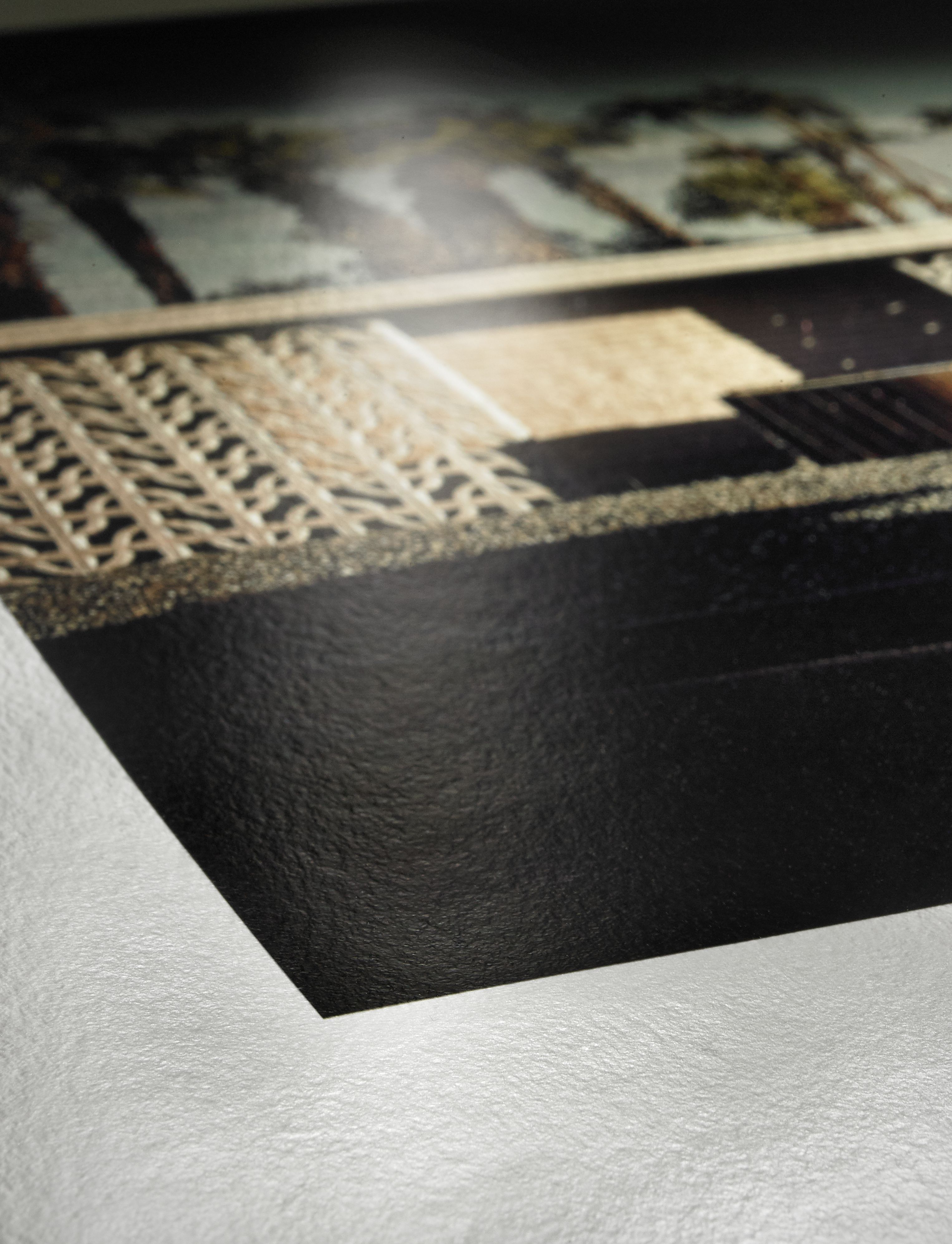
For most of my prints, I use HahnemĂĽhle Photo Rag Metallic. This is the closest metallic alternative to printing on actual metal like ChromaLuxe. It's a 340 GSM, high-gloss metallic finish paper that makes images look genuinely three-dimensional.
The metallic finish captures the depth and luminosity that landscape photography demands. When light hits the surface, the image seems to glow from within, revealing layers of detail and dimension that flat papers simply cannot achieve. This paper previously won the TIPA World Award 2019 for Best Inkjet Photo Paper—recognition from the industry that confirms what my own testing has proven.

Loading...
Landscape photography is about capturing light—how it interacts with atmosphere, geology, water, and sky. A metallic surface doesn't just display the image; it participates in the light dynamics. The print itself becomes luminous, changing subtly as you move around it, as the light in the room shifts. It's the closest you can get to experiencing the actual light of that moment without being there.
For photographs that are better represented in matte—images where subtlety and softness are more important than luminosity—I print on Hahnemühle Museum Etching paper. After comparing various etching patterns and textures, this was unquestionably the most premium and best.
It's a 350 GSM paper with ISO 9706 certification, confirming museum quality for the highest age resistance. The texture has a beautiful, tactile quality that gives the print a fine art feel—like a painting or an etching rather than a photograph. For certain images, particularly those with softer light or more intimate compositions, this matte finish provides a contemplative quality that metallic would overpower.

Loading...
The choice between Photo Rag Metallic and Museum Etching isn't arbitrary—it's based on what each specific image needs to communicate its truth most effectively. Some moments demand the drama and depth of metallic. Others require the quiet elegance of matte. But both papers share the same foundation: Hahnemühle's 440 years of expertise in creating archival materials that will outlast us all.
For my limited edition prints, I use ChromaLuxe metal—the most enduring material I've come across for fine art photography. While Hahnemühle paper offers museum-grade archival quality, ChromaLuxe takes permanence to an entirely different level.
It's not just about aesthetics—though the visual impact is extraordinary. The image literally looks three-dimensional, with a depth and luminosity that far surpasses even the best metallic paper. But what matters most is its permanence. ChromaLuxe is fireproof, scratch-proof, dust-proof, waterproof—essentially life-proof. It's designed to last not just decades, but potentially millennia.
The dye is infused into the metal itself through sublimation, becoming part of the substrate rather than sitting on top of it. This isn't a photograph that will fade, peel, or deteriorate. It's a permanent fusion of image and material.
I want these limited edition pieces to survive long after I'm gone. Imagine: centuries from now, someone discovers an abandoned building overgrown with plants on an island populated by resurrected dinosaurs. Among the ruins, they find one of these metal prints.
That image would shine as new as yesterday. The colors would still be vibrant. The detail would still be sharp. It would be a window into a moment of Earth's history, preserved with the same clarity as the day it was printed. That's not hyperbole—that's the reality of what this medium can do.
Every ChromaLuxe metal print is framed. This isn't optional—it's essential. I've experimented extensively with both framed and unframed matte prints, and the difference is profound. A frame doesn't just contain the image; it elevates it, protects it, and gives it the gravitas it deserves.
For my ChromaLuxe prints, I use the Modern Metal Float Frame. This isn't a traditional frame that sits flush against the print. Instead, it creates a floating effect—the metal print appears to hover within the frame, separated by a small gap that adds depth and dimension. The frame itself is sleek, minimal, and modern, designed to complement rather than compete with the image.
The float frame provides extra width around the image, creating breathing room that gives the composition space to exist. This isn't just aesthetic—it's functional. The additional border protects the edges of the print from damage, from accidental bumps, from the wear and tear of handling and installation. When you're creating art that needs to last millennia, every layer of protection matters.
But beyond protection, the frame adds gravitas. A framed print commands attention in a way that an unframed print simply cannot. It signals that this is a finished work of art, not just a photograph. It transforms the print from an image into an object—something substantial, something permanent, something worthy of the moment it captures.
The Modern Metal Float Frame is constructed with the same attention to quality and permanence as the print itself. It's built to last, designed to protect, and crafted to enhance. When you're investing in a limited edition ChromaLuxe print—a piece that will outlast civilizations—the frame is the final layer of permanence and presentation that completes the work. See my care instructions to ensure your print remains pristine for generations.
This matters because these images aren't just art—they're historical documents. They're slices of spacetime, captured authentically, preserved permanently. When I photograph a glacier that's been there for thousands of years but might be gone in a century due to climate change, I'm creating a record that needs to outlast the glacier itself.
The medium has to match the message. If I'm capturing moments that are unique in the history of the universe, moments that will never occur again, then the physical print needs to be worthy of that significance. It needs to be as enduring as the mountains I photograph, as permanent as the ancient sequoias, as resilient as nature itself.
This is why ChromaLuxe is reserved for limited editions. It's not just a printing choice—it's a philosophical statement about permanence, authenticity, and the responsibility I feel to preserve these moments for future generations who may never have the chance to see these places as they exist today. Every print comes with a lifetime guarantee.
Every element of my technical approach serves the same goal: preserving authentic moments of Earth's beauty with maximum fidelity and permanence.
Each choice is deliberate. Each has been tested against alternatives. Each represents the best available solution for creating art that will survive and remain true for generations.
Learn about my philosophy and creative process. Discover how this technical approach translates to our lifetime guarantee and view ChromaLuxe prints. If you have questions, please contact me.